

Why Australian Leaders Are Demanding Verified Lean Six Sigma Credentials
Australian organisations are becoming more cautious about what a certificate actually proves. In an unregulated market, a Lean Six Sigma credential needs to be more than impressive-looking paperwork. It needs to be verifiable, understandable, and trusted by employers making hiring and capability decisions.

In one sentence
The market is shifting away from static, attendance-only certificates and toward credentials that are easier to verify, easier to trust, and easier for employers to assess with confidence.
Let me start with a situation many hiring managers, operational leaders, and Continuous Improvement sponsors have seen before.
A candidate lists a Lean Six Sigma credential on their CV. On paper, it looks credible. The certificate sounds right. The belt level sounds impressive. But once the conversation turns to methodology, project discipline, or practical application, the gaps show up fast.
That moment is uncomfortable for everyone involved. It is also one reason more Australian organisations are becoming far more cautious about what a certificate actually proves.
The issue is not that Lean Six Sigma certification lacks value. The issue is that not every certificate carries the same level of credibility, verification, or assessment discipline. In an unregulated market, leaders can no longer afford to assume that a certificate automatically reflects real capability.
That is exactly why credential verification is becoming more important.
At Lean Sigma Experts Australia, we recently became the first accredited ILSSI training partner in Australia. For me, that matters not just because it is a milestone. It matters because it reflects a broader shift in what organisations now expect from certification: clearer standards, independent verification, stronger portability, and more confidence that the credential behind the CV is genuine.
The real problem is not certification. It is unverifiable certification.
For years, parts of the training market have relied on certificates that look polished but are difficult to verify independently. In some cases, a certificate may simply confirm attendance. In others, it may not clearly tell an employer whether the learner was examined, how the credential can be checked, or what standard sits behind it.
That creates friction for organisations trying to hire well, build capability, or approve training budgets with confidence.
When leaders invest in Lean Six Sigma capability, they are not buying decorative paperwork. They are investing in problem-solving ability, process discipline, and the capacity to deliver improvement outcomes. If the credential cannot be verified easily, its value weakens at the point where it matters most: employer trust.

Why static certificates are no longer enough
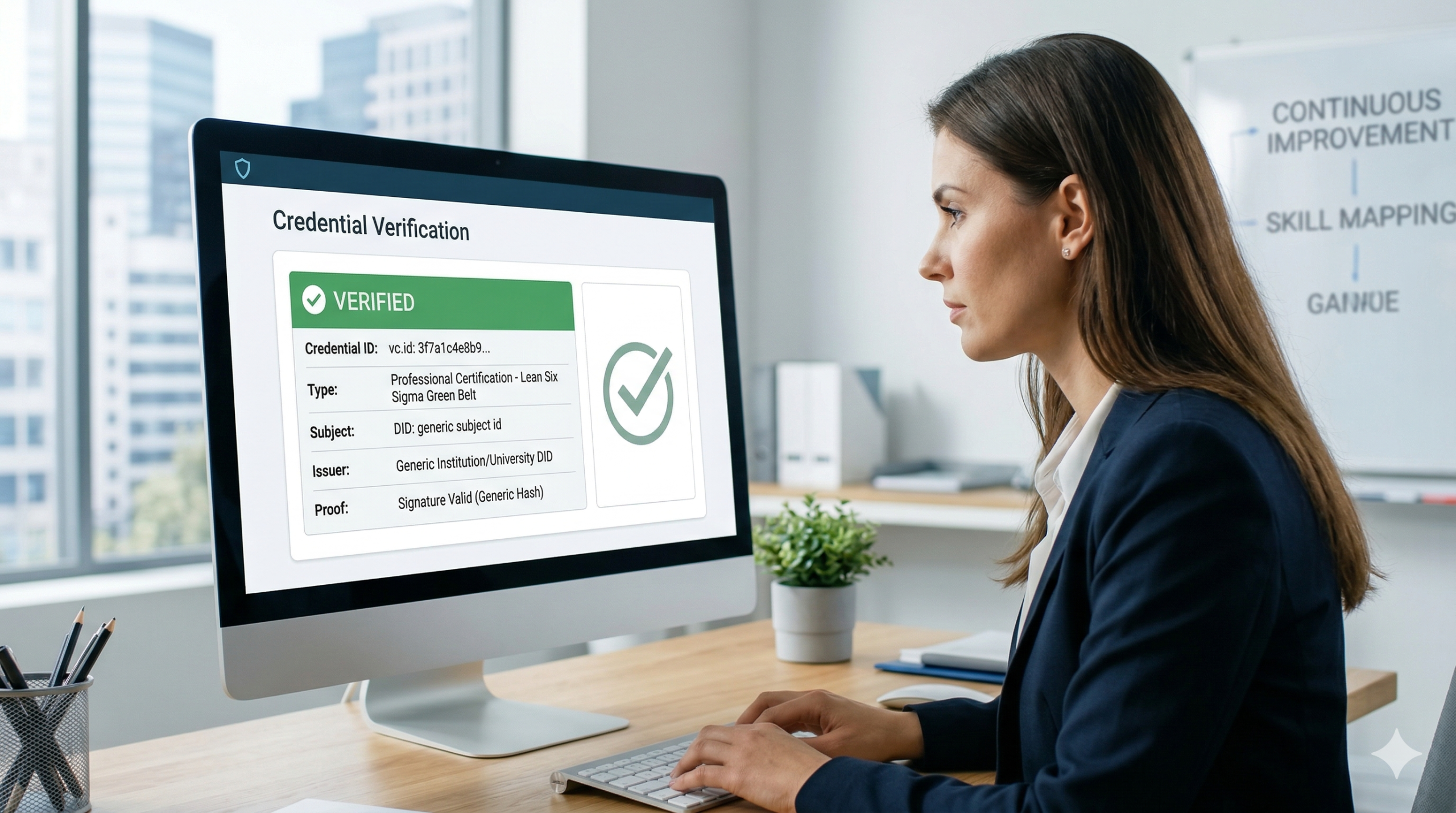
Traditional certificates, especially static PDFs, can be easy to share but hard to validate. If verification depends on back-and-forth emails, private confirmation, or assumptions about the provider, the process is already too weak for modern capability decisions.
ILSSI provides a public certification verification pathway, and it also references NFT-backed records for immutable authentication. That does not eliminate every issue in the world of credentials, but it does create a clearer and more modern verification pathway than the old “trust me” model many organisations have tolerated for too long.
For employers, that matters. A verifiable credential is easier to trust, easier to check, and easier to use in hiring or internal capability decisions.
What bona fide credentials should look like
In practical terms, a bona fide Lean Six Sigma credential should answer a few basic questions clearly.
- Who stands behind it?
- Can the credential be independently verified?
- Was the learner actually assessed?
- Does the credential remain valid over time?
- Will it still make sense outside one local market or one provider ecosystem?
Those questions are no longer optional. They are part of basic due diligence.
This is one reason I believe the market is moving away from vague certification claims and toward credentials that are easier to authenticate and defend.
Useful next read
If your team is still comparing certification bodies rather than verification standards, review our Australia-specific guide:
IASSC vs CSSC vs ILSSI.
Why ILSSI changes the conversation in Australia
LSEA’s ILSSI accreditation gives Australian organisations access to a credential path that is internationally recognised, exam-based, and publicly verifiable. The model also includes digital credentialing support, lifetime validity, and a stronger pathway for proving both knowledge and practical application.
| What leaders care about | Why it matters | How this article frames it |
|---|---|---|
| Verification | Employers need to confirm authenticity quickly | Public verification tools and secure digital records reduce ambiguity |
| Assessment | Attendance alone is not proof of competence | Exam-based certification gives a stronger signal than participation-only credentials |
| Portability | Credentials should make sense beyond one provider or market | Internationally recognised pathways carry wider credibility |
| Practical application | Organisations need people who can apply methodology, not just describe it | Project-based pathways help strengthen evidence of applied capability |
1. Verification becomes easier
ILSSI provides a verification pathway through its public certification verification page. That gives employers and professionals a cleaner way to confirm authenticity.
2. Portability improves
Professionals increasingly need credentials that make sense beyond one employer or one local market. A qualification that is internationally understandable carries greater long-term value.
3. Assessment matters more
A stronger certification pathway should make it easier to distinguish between attendance, assessed knowledge, and applied capability. That is where exam-based certification and project-based validation become far more meaningful than a certificate title alone.
Assessment matters more than most providers admit
One of the most frustrating things for hiring managers is discovering that a certificate does not reflect demonstrated competence. Sometimes that happens because the programme was weak. Sometimes it happens because assessment was light. Sometimes the certificate itself simply tells you too little.
A stronger certification model should make it easier to distinguish between:
- attendance
- assessed knowledge
- applied capability
An exam-based credential helps validate knowledge. A project-based or audited project route helps strengthen evidence of application. Together, those signals are far more meaningful than a title on a PDF.
Raising standards without creating unnecessary barriers
Rigour matters, but so does learner support.
LSEA’s ILSSI-aligned model includes a free exam retake pathway and added support where needed. That is the kind of design choice I respect. Standards should be real, but the system should still help capable professionals succeed.
For organisations, that matters too. The goal is not to make people anxious about certification. The goal is to build genuine capability with a standard that leaders can trust.
Decision support for organisations
If your organisation is still deciding on the right certification level for different employees, use our
Lean Six Sigma certification eligibility quiz
or read
which Lean Six Sigma certification suits you best.
What Australian leaders should now ask before approving certification spend
- Who accredits this certification? If the answer is vague, that is already a warning sign.
- How can the credential be verified independently? If verification is clumsy or unclear, trust weakens.
- What exactly did the learner have to do to earn it? Attendance alone is not the same as assessment.
- Is the credential internationally understandable and portable? That matters more than many people realise.
- Is there a pathway that shows practical application, not just theory? For many roles, this is where real value becomes visible.

The bottom line
Australian organisations are becoming more disciplined about what certification should actually prove.
That is a good thing.
A Lean Six Sigma credential should not just look official. It should stand up to scrutiny. It should be easier to verify, easier to trust, and easier for employers to interpret with confidence.
That is why I believe the era of ambiguous, unverified certificates is ending. Leaders are no longer asking only whether someone has a certificate. They are asking whether that credential is backed by a recognised standard, a clear assessment pathway, and a verification process that gives the organisation confidence.
That is the standard the market should have demanded long ago. Now it finally is.
Frequently Asked Questions
What makes a Lean Six Sigma credential verifiable?
A verifiable credential should be backed by a recognised body and should allow employers or other stakeholders to confirm authenticity independently through a public verification process or secure credential record.
Does ILSSI certification require an exam?
ILSSI states that Yellow Belt, Green Belt, and Black Belt certification requires passing an exam. It also provides a project-based certification route through accredited training organisations. You can read more on the
ILSSI FAQ.
Can ILSSI credentials be checked online?
Yes. ILSSI provides a public
certification verification page
that allows users to search for certificate details.
Why does verification matter for employers?
Because it reduces ambiguity. A credential that can be checked independently gives employers more confidence in hiring, promotion, and capability-development decisions.
Build capability with credentials your organisation can actually trust
If you are reviewing certification options for your team, speak with Lean Sigma Experts Australia about ILSSI-accredited pathways that offer stronger verification, international recognition, and a clearer standard of credibility.