

IASSC vs CSSC vs ILSSI: Choosing the Right Lean Six Sigma Certification Body in Australia
A practical comparison of three recognised Lean Six Sigma certification bodies to help learners and organisations in Australia choose the right certification pathway.
Many people looking at Lean Six Sigma training in Australia focus first on belt level. That is understandable, but it is only one part of the decision. The certification body behind the programme also matters because it influences exam structure, credential validity, flexibility, and the overall certification experience.
That means the real question is not only whether you should take Yellow Belt, Green Belt, or Black Belt. It is also whether the certification route behind that training suits your goals, expectations, and preferred learning style.
This page compares PeopleCert IASSC , CSSC, and ILSSI so you can make a more informed decision in Australia. If you are still deciding on belt level rather than certification body, you can also read which Lean Six Sigma certification suits you best. This page is focused specifically on the bodies behind the certification pathway.
The Three Certification Bodies at a Glance
PeopleCert IASSC
Known for a structured, standardised, exam-focused certification pathway.
CSSC
Known for flexibility, open-book structure, and accessible certification routes.

ILSSI
Known for practical accessibility, digital credentials, and lifetime validity.
Choosing a certification body is different from choosing a belt level. The certification body shapes the exam structure, flexibility, and credential style. The belt level defines the depth of Lean Six Sigma capability you are pursuing.
Why comparing certification bodies matters
Two people can both say they hold a Lean Six Sigma certification, but the pathways behind those credentials can be very different. One may have completed a highly standardised closed-book exam. Another may have taken a more flexible route with multiple attempts. Another may place value on digital credentials, language accessibility, or lifetime validity.
That is why comparing certification bodies matters. It affects the learning experience, the structure of the exam, and how well the route fits your practical needs. For organisations, it also affects how certification aligns with workforce capability, deployment goals, and improvement strategy.
For broader trust context around recognised accreditation, you can also review our page on globally recognised accreditation.
PeopleCert IASSC at a glance
IASSC is widely associated with standardised Lean Six Sigma examination and strong assessment discipline. It is often chosen by candidates who want a formal, globally recognised exam-focused credential. In current delivery models, PeopleCert plays an important role in exam delivery and quality assurance around IASSC-accredited pathways.
This route is often attractive to learners and organisations that value structure, formality, and clear examination standards.
For related background, see our page on PeopleCert accreditation for IASSC Lean programmes.
CSSC at a glance
CSSC is known for flexibility, accessible exam structure, and multiple exam attempts. It is often appreciated by learners who want a recognised credential while maintaining more control over the testing experience and study pathway.
That makes CSSC especially relevant for candidates who want open-book flexibility, manageable entry points, and a practical self-study-friendly route.
ILSSI at a glance
ILSSI positions itself as an international Lean Six Sigma body with a practical and modern orientation. It is associated with flexible exam structure, digital credentials, multilingual accessibility, and lifetime validity.
That combination can make ILSSI especially attractive to learners and organisations looking for a modern certification route with practical accessibility. For local context, see our page on becoming an ILSSI accredited partner in Australia.
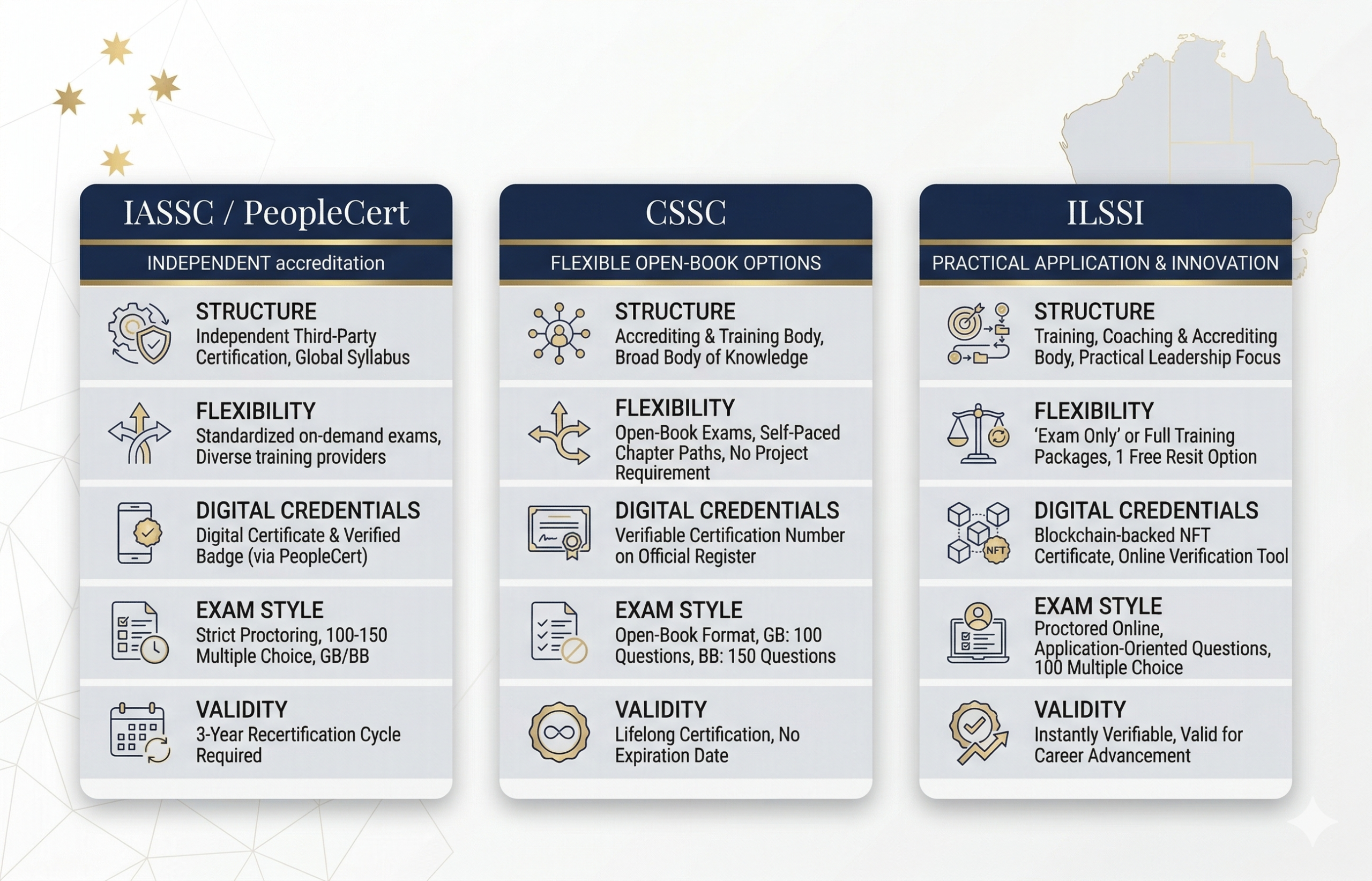
Key differences between IASSC, CSSC and ILSSI
| Area | PeopleCert IASSC | CSSC | ILSSI |
|---|---|---|---|
| General positioning | Highly standardised, exam-focused certification body | Flexible, accessible certification route | Practical, international route with modern credential options |
| Typical appeal | Candidates wanting strong exam structure and formal assessment | Candidates wanting open-book flexibility and multiple attempts | Candidates wanting accessibility, digital credentials, and multilingual flexibility |
| Book format | Closed book, proctored | Open book | Open book, proctored |
| Validity | Renewal every 3 years | No expiry | No expiry |
| Retake structure | Exam repurchase required | Total 3 attempts allowed | 1 free retake, with optional coaching support if needed |
Exam structure snapshot
| Certification Body | Certification | No. of Questions | Exam Duration | Passing Score |
|---|---|---|---|---|
| IASSC | Yellow Belt | 60 (including 6 non-graded questions) | 2 hours | 70% |
| IASSC | Green Belt | 100 (including 10 non-graded questions) | 3 hours | 70% |
| IASSC | Black Belt | 150 (including 15 non-graded questions) | 4 hours | 70% |
| CSSC | Yellow Belt | 50 | 1 hour | 140/200 points |
| CSSC | Green Belt | 100 | 2 hours | 280/400 points |
| CSSC | Black Belt | 150 | 3 hours | 420/600 points |
| ILSSI | Yellow Belt | 50 | 1 hour | 70% |
| ILSSI | Green Belt | 100 | 2 hours | 70% |
| ILSSI | Black Belt | 150 | 3 hours | 70% |
PeopleCert IASSC is usually the more structured and standardised route. CSSC is usually the more flexible and accessible route. ILSSI is often the more modern and practically accessible route, especially for learners who value digital credentials and lifetime validity.
Which certification body may suit you best?
PeopleCert IASSC may suit you best if you value exam standardisation, strong assessment discipline, and a formal certification route.
CSSC may suit you best if you prefer flexibility, open-book examination, multiple attempts, and a more accessible self-study-friendly structure.
ILSSI may suit you best if you want international accessibility, digital credentials, flexible structure, and broader language support.
For organisations, the decision may also depend on how the certification route fits workforce training, deployment needs, and implementation goals. For individuals, the main factors are usually structure, flexibility, recognition, and preferred learning experience.
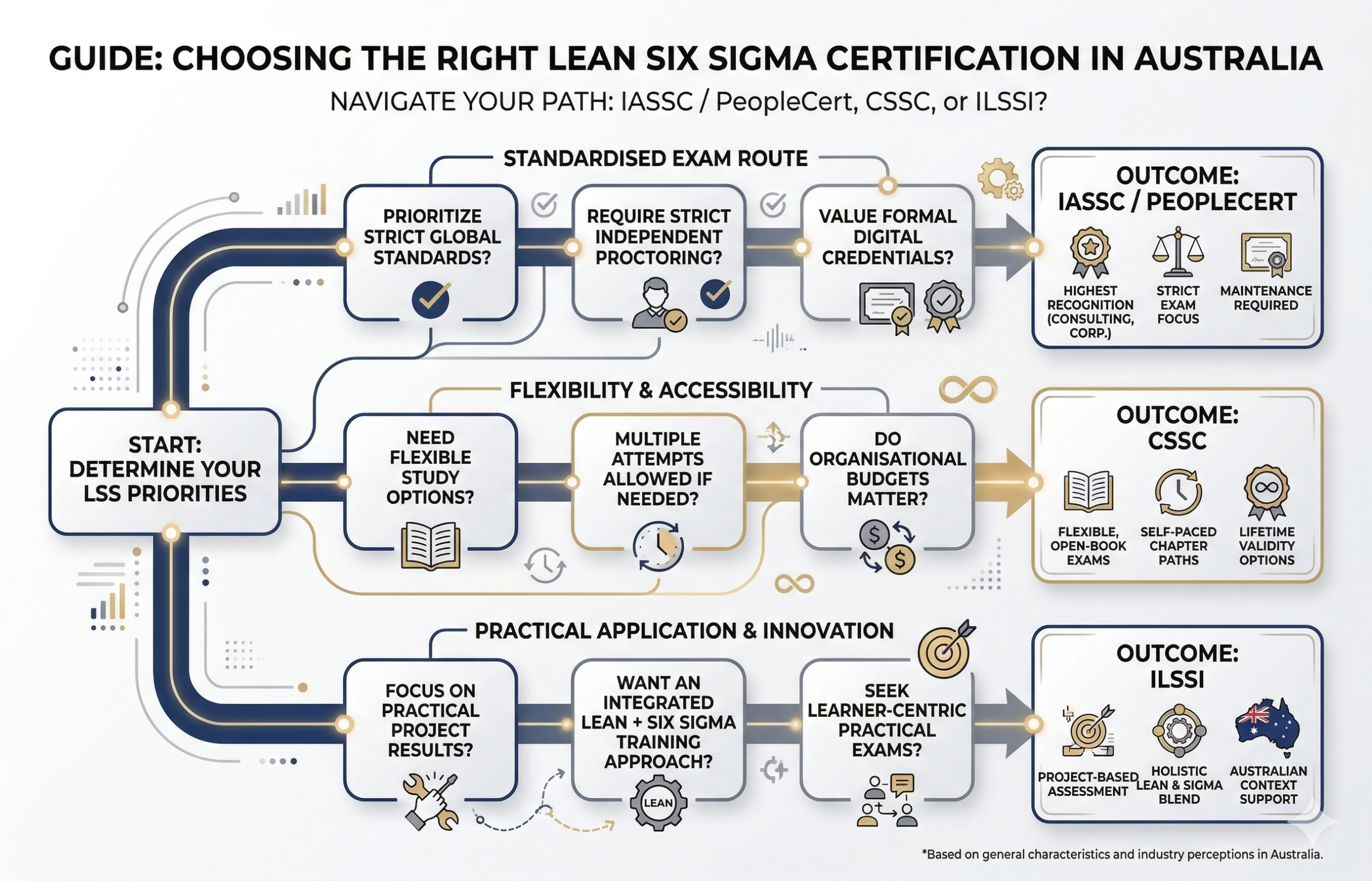
What Australian learners and organisations should consider
Start with these questions.
- Do you want a tightly standardised exam route or a more flexible one?
- Is lifetime validity important to you?
- Are you selecting certification for personal progression, organisational capability building, or both?
- Do you want a route that aligns with your learning preferences, retake comfort, and practical delivery needs?
Those questions often matter more than asking which option is simply “best”. The better approach is to match the certification body to the outcome you actually want.
If you are still uncertain about your starting point, you can also use our certification eligibility quiz as a practical next step.
Frequently Asked Questions
What is the difference between IASSC, CSSC and ILSSI?
The main differences are in exam structure, flexibility, credential validity, retake rules, and the overall certification experience. PeopleCert IASSC is typically the more standardised route, CSSC is more flexible, and ILSSI combines flexibility with digital and internationally accessible credentialing.
Which Lean Six Sigma certification body should I choose?
That depends on your priorities. If you want a highly structured and exam-focused route, PeopleCert IASSC may suit you. If you want flexibility and multiple attempts, CSSC may be more suitable. If you value lifetime validity, digital credentials, and broader accessibility, ILSSI may be worth considering.
Does the certification body matter when selecting Lean Six Sigma training?
Yes. The certification body affects the assessment style, the structure of the credential, and how the pathway aligns with your learning goals or organisational capability needs. That is why it is worth comparing the bodies before committing to training.
Is choosing the certification body the same as choosing the belt level?
No. The belt level defines the depth of Lean Six Sigma capability you are pursuing, while the certification body defines the structure, style, and rules of the certification pathway itself. Both decisions matter, but they are not the same decision.
Speak with Lean Sigma Experts Australia about the right route
Lean Sigma Experts Australia supports learners and organisations seeking internationally recognised Lean Six Sigma certification pathways from PeopleCert IASSC, CSSC, and ILSSI. Whether you are evaluating Yellow Belt, Green Belt, or Black Belt pathways, we can help you choose a route that matches your goals and practical requirements.
To discuss the right certification pathway, training format, or implementation support, contact us through the Lean Sigma Experts Australia contact page.